
Flexible Pipes
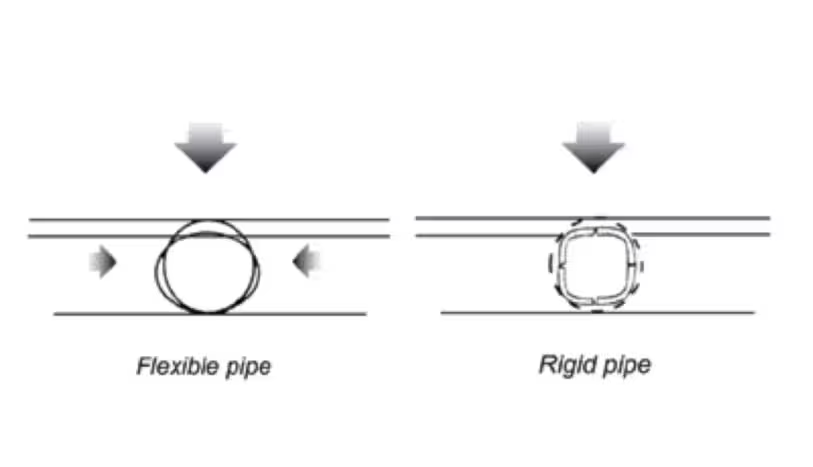
Pipe behavior can generally be classified as flexible or rigid, depending on how it performs when installed. Flexible pipe must move, or deflect, to transfer the overburden to the surrounding soil. Structured and single wall corrugated pipes are all examples of flexible pipe. Flexible pipes are designed to transfer loads through deflection which leads to mostly deformation without structural damage providing many advantages.
Rigid pipe is commonly defined as a pipe which does not deflect more than 2% without structural distress, and as such, it must be designed to carry the majority of the load directly. Reinforced and non-reinforced concrete pipes are both examples of rigid pipe.
Both flexible and rigid pipe depend on proper backfill. In the case of flexible pipe, deflection allows loads to be transferred to and carried by the backfill. Rigid pipe transmits most of the load through the pipe wall into the bedding. In both cases, proper backfill is very important in allowing this transfer to occur.